Finalists of the Optical Design Contest

This year, the contest challenges participants to create bold and visionary frames on the theme: “The futur of optics - What vision?” These designs must go beyond mere corrective function to become instruments of transformation, empowerment, and reinvention of vision and the world.
Presided over by Olivier Lapidus, a renowned French designer known for his forward-thinking vision, the Optical Design Contest highlights the potential for eyewear to become much more than a simple accessory: a true technology, a source of power, a gateway to new perceptions.
Join us at SILMO Paris on the Optical Design Contest stand — the 2026 winner will be announced on Friday, September 25. Until then, discover the finalists!
ALOGAKI
Elsa de Miguel / Paula Gómez / Adriana González - Universidad de Valladolid (Spain)
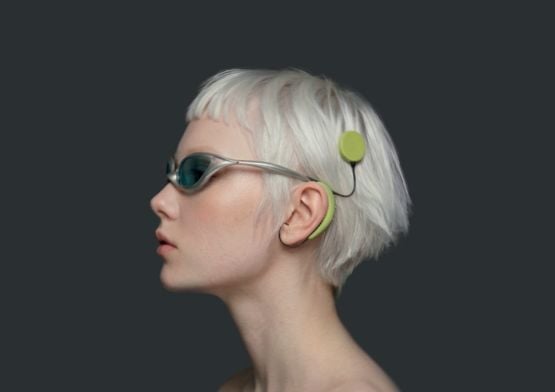
A premium system designed for deaf and visually impaired users, inspired by the praying mantis: a stabilisation wing allows the frame to be converted into a standalone hearing implant when removed, powered by a dedicated micro-battery.
ARCH TERRAIN
Megan Brodmerkel - Savannah College of Art and Design (United States)
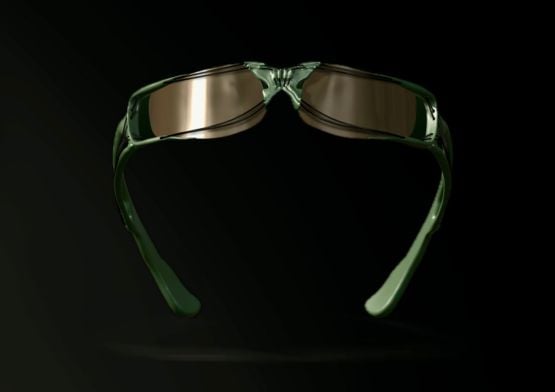
"Suspension" sport glasses designed for climbing, hiking and cycling, in which temple tension and lens-to-face distance adjust in real time via a dial inspired by the BOA Fit System, with an elastic hinge and precision rail.
DEAMSCAPE
Sophia Denison - Savannah College of Art and Design (United States)
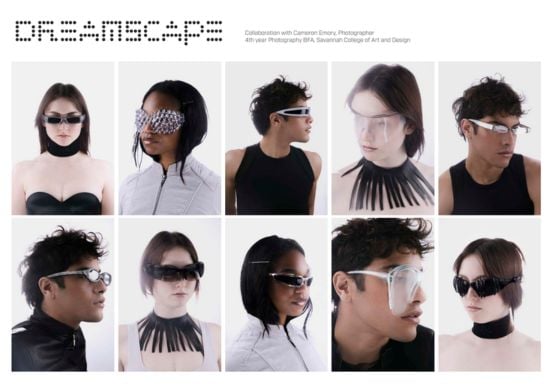
An experimental collection designed to counter the "attention crisis" (average attention span has fallen from 150 to 47 seconds since 2004) by recreating sensations of mind-wandering through visual distortion.
EMOSLOW
Océane Gallais - CY Cergy Paris Université (France)
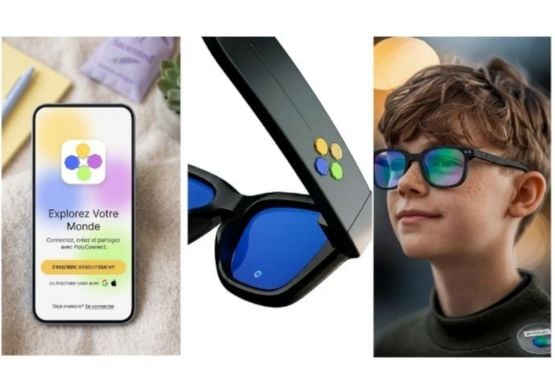
Smart glasses designed for children aged 8 to 12 with concentration difficulties, anxiety, hypersensitivity or emotional regulation challenges (ADHD, ASD). A heart rate sensor integrated into the temple continuously monitors the child's heart rate; a microcontroller then triggers a gradual colour shift in the electrochromic lenses (from soft green to lavender) reflecting rising stress levels, helping the child to recognise and name their emotions. An associated mobile application provides personalised monitoring and breathing exercises.
GROUND
Tidiane Cardot / Atlas Ozer / Theo Vanpoperynghe - Rubika ISD (France)
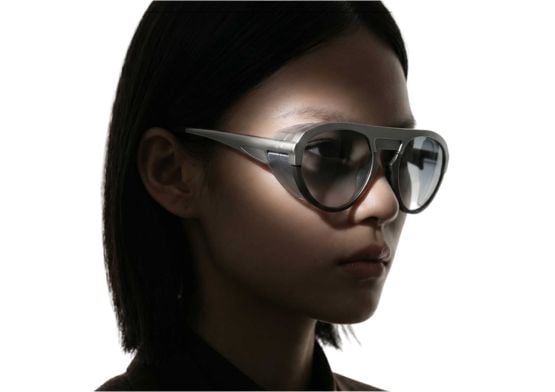
"Buffer glasses" equipped with an EEG sensor that captures brainwaves and generates animated cymatic patterns in electrochromic lenses, to facilitate the transition between two cognitive tasks (guided meditation, refocusing after sport or a meeting).
HALO
Thibault Lacroix / Basile Fruteau de Laclos - L'école de Design Nantes Atlantique (France)
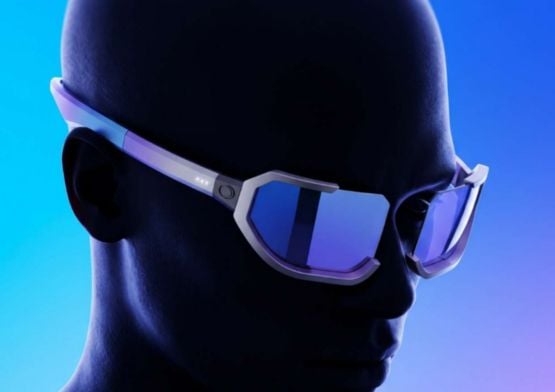
A dual-lens frame designed for Generation Z in open-plan / flex-office environments: a standard corrective lens is paired with a second polycarbonate glazing incorporating an SPD (Suspended Particle Device — a proven technology used for 30 years to tint aircraft windows) film, which electronically darkens peripheral vision at the press of a button ("Instant focus, infinite clarity").
LEARNING TO SEE
Sini VIRTANEN - Aalto University, School of Art Design and Architecture (Finland)
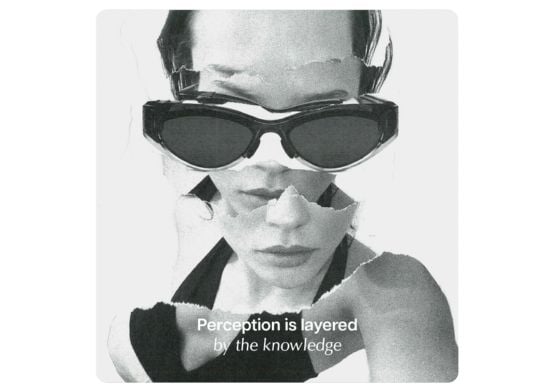
Glasses with embedded AI (eye-tracking, computer vision, augmented reality) that reverse the traditional learning process by guiding perception to "see like an expert" before acquiring theoretical knowledge (architecture, biology, history, etc.).
LUPO
Amandine Crépin - CY Cergy Paris Université (France)
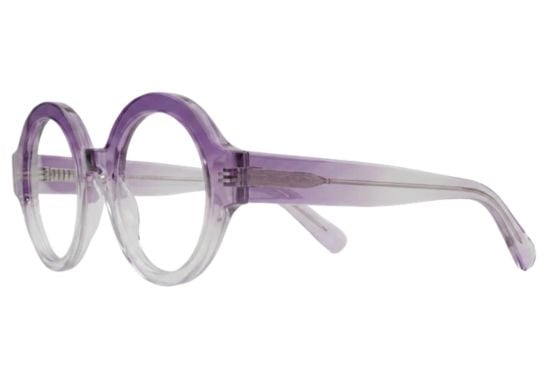
LUPO turns sun protection into a game. Thanks to its photosensitive pigments, this recycled polycarbonate frame changes colour when exposed to UV rays — a playful signal that reminds children and their parents when it is time to protect their skin. Because 80% of UV exposure occurs before the age of 18, significantly increasing the risk of skin cancer.
PROME
Camille Déniel - L'Ecole de Design Nantes Atlantique (France)
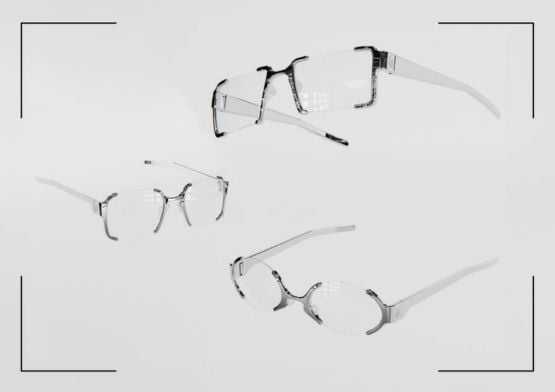
An "everyday jewellery" frame in recycled stainless steel, with interchangeable temples in 3 sizes (S/M/L) and magnetised accessories (plates and modules) that allow the style to be refreshed without replacing the entire pair.
SPORA
Mateo Caballero Rodrigo / Mario Carrasco García / Gabriel Casado Matesanz - Universidad de Valladolid (Spain)
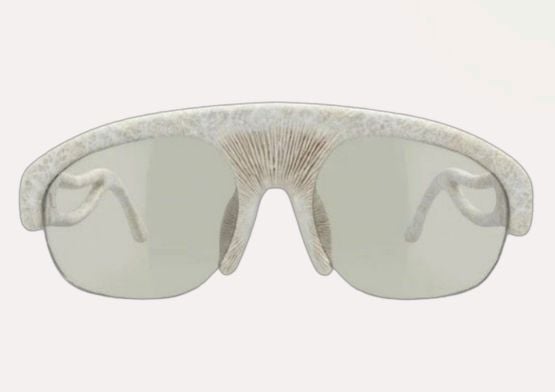
A frame grown (not manufactured) from mycelium cultivated on agricultural waste, moulded and then stabilised through gentle heat treatment; a 100% biodegradable and compostable material, with each frame as unique as a root network.